
The Best Type of Travel for Creative Burnout

What Creative Burnout Actually Feels Like
Creative burnout rarely looks dramatic. It does not always show up as collapse or visible exhaustion. Instead, it often appears as a quiet thinning of ideas. Work still gets done, but it feels heavier. Inspiration does not arrive easily. Tasks that once felt intuitive begin to feel mechanical.
For entrepreneurs, designers, writers, photographers, strategists, and founders, this kind of burnout can be especially destabilizing because creativity is not just a task. It is identity. When imagination feels blocked, it can feel personal.
The World Health Organization defines burnout as a syndrome resulting from chronic workplace stress that has not been successfully managed. While this definition focuses on occupational stress, research highlighted by the American Psychological Association shows that prolonged cognitive overload reduces mental flexibility and problem-solving capacity. When the brain remains in a heightened state of stress, it prioritizes efficiency over imagination. Creativity requires mental spaciousness. Stress reduces it.
This is why the best type of travel for creative burnout is not high-energy, high-input travel. It is the opposite.

Why Most Vacations Do Not Solve Creative Burnout
Many vacations are designed around stimulation. Packed itineraries, back-to-back activities, multiple destinations in a short period of time, and constant documentation through social media keep the brain in reactive mode. Even in beautiful places, the mind remains busy processing, navigating, planning, and performing.
For someone experiencing creative burnout, this type of travel can prolong the problem rather than solve it. The brain does not receive the quiet it needs to reset. Instead of restoration, it receives novelty layered on top of fatigue.
Creative recovery requires subtraction. Fewer decisions. Fewer notifications. Fewer expectations. A reduction in external demands allows internal clarity to return.
This is where slow, nature-based destinations become powerful.
The Science Behind Slowing Down
There is measurable evidence supporting the connection between nature and cognitive restoration. A study published in PLOS ONE found that participants who spent several days immersed in natural environments performed significantly better on creative problem-solving tasks compared to participants in urban settings. Researchers linked this improvement to reduced mental fatigue and improved attentional capacity.
Similarly, research discussed by National Geographic explains that time in natural settings reduces cortisol levels and supports emotional regulation. Lower stress levels allow the brain to move out of survival mode and back into exploratory thinking. Creativity thrives in that exploratory state.
The key factor is not simply taking time off work. It is entering an environment that lowers stimulation enough for the nervous system to recalibrate.
Why Quiet Destinations Are Ideal for Creative Recovery
The best type of travel for creative burnout typically includes three elements: minimal noise, limited digital interference, and close proximity to natural landscapes. When sensory input decreases, mental bandwidth increases.
In quiet destinations, attention expands instead of fragments. You notice small details. You think in longer arcs. You allow ideas to surface gradually instead of forcing them through pressure.
Large cities, even beautiful ones, demand constant micro-decisions. Crossing streets, navigating crowds, choosing between dozens of options, managing logistics. Small islands and low-density destinations reduce that cognitive load. That reduction is not boring. It is restorative.

Why Vieques, Puerto Rico Supports Creative Reset
Vieques, Puerto Rico offers a rare environment for creative recovery because of its scale and rhythm. Located just off the eastern coast of mainland Puerto Rico, Vieques feels intentionally removed without being inaccessible.
There are no high-rise hotel corridors, no sprawling commercial districts, and no dense nightlife competing for attention. Instead, the island offers open sky, undeveloped beaches, quiet roads, and a pace that encourages lingering.
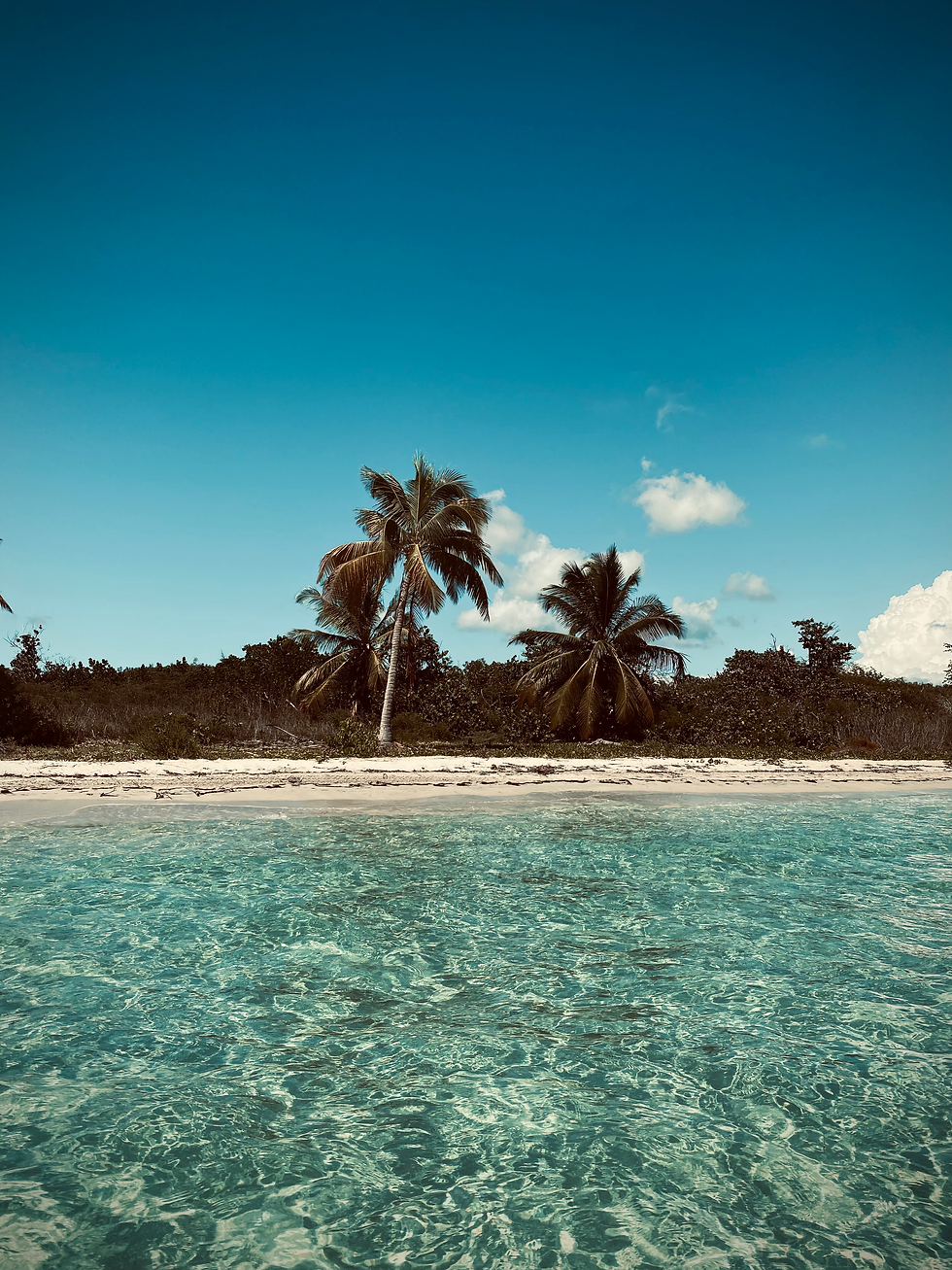
Beaches like Playa La Chiva and Playa Negra provide visual openness that allows the mind to decompress. The horizon stretches uninterrupted. The water moves slowly. There is space to sit without being observed or distracted.
At night, limited light pollution reveals a sky filled with stars. Organizations such as the International Dark-Sky Association advocate for preserving natural darkness because of its benefits for both ecosystems and human health. Reduced artificial light improves sleep quality and supports circadian rhythm regulation. In Vieques, the absence of glare is not aesthetic only. It is functional. When the environment quiets, the mind follows.
What a Creative Reset in Vieques Looks Like
A creative reset in Vieques does not require a formal retreat schedule. It unfolds gradually.
You wake naturally because sunlight filters through the room instead of an alarm interrupting your sleep. Morning begins with coffee outside, not with email. The air is warm, and the only sounds are birds and wind moving through trees.
You spend hours at the beach without checking the time. There is no urgency to document the moment. The water is clear enough to see the sand beneath you. You float. You breathe. Thoughts slow down.
By the second day, the internal noise softens. The impulse to check notifications weakens. Conversations deepen because they are not interrupted by screens. You begin noticing patterns in your own thinking. You reflect on work without anxiety attached to it.
By the third day, ideas begin returning. Not in a rush. Not in a frenzy. They return quietly. A new angle on a project. A different way to structure a problem. A renewed sense of direction.
Creative burnout often dissolves not through stimulation, but through stillness.
The Role of Where You Stay
Accommodation plays a significant role in whether creative recovery is supported or undermined. Large resorts often include televisions in every room, bright lighting throughout the property, and constant background activity. Even in scenic locations, these elements maintain subtle stimulation. Smaller, design-forward properties create a different experience.
At Lejos Eco Retreat, a boutique eco-hotel in Vieques, Puerto Rico, the architecture prioritizes openness and quiet. Suites are designed to integrate natural light and airflow. There are no televisions in the rooms. Materials such as wood, linen, and stone create a sensory softness rather than visual overload.
Lejos also follows the principles promoted by the International Dark-Sky Association, preserving the island’s night environment. Evenings are defined by darkness and stars instead of artificial brightness.
These design choices are not decorative. They reduce environmental stimulation and allow guests to disengage from performance. When the environment is calm, the nervous system does not need to remain alert.
Who This Type of Travel Is For
The best type of travel for creative burnout is particularly effective for individuals who spend most of their time producing or strategizing. Entrepreneurs who feel mentally saturated. Designers who are visually overstimulated. Writers who feel disconnected from their voice. Remote workers who have blurred the boundary between workspace and living space.
This type of travel is not about abandoning ambition. It is about sustaining it. Creativity cannot operate indefinitely under pressure. It requires cycles of expansion and rest.
By choosing destinations like Vieques, Puerto Rico, travelers create conditions that support those cycles rather than disrupt them.
Why It Is Worth the Discomfort
Unplugging can feel uncomfortable at first. Without constant input, unresolved thoughts may surface. Restlessness may appear. This is normal. It is part of recalibration.
But beyond that discomfort lies clarity. Sleep deepens. Focus sharpens. Emotional reactivity decreases. You begin responding instead of reacting.
Creative burnout is rarely solved by doing more. It is eased by creating an environment that allows less.
Vieques offers that environment. And within it, Lejos Eco Retreat embodies the kind of quiet luxury that supports genuine restoration rather than spectacle.
If your creative work feels heavy, it may not be a lack of talent. It may be a lack of space.
Giving yourself that space is not indulgent. It is strategic.
If you are ready to experience the best type of travel for creative burnout in an environment that prioritizes stillness and design, this is your invitation.
Book your stay at Lejos Eco Retreat in Vieques, Puerto Rico and allow your creativity the room it needs to return.


Comments